
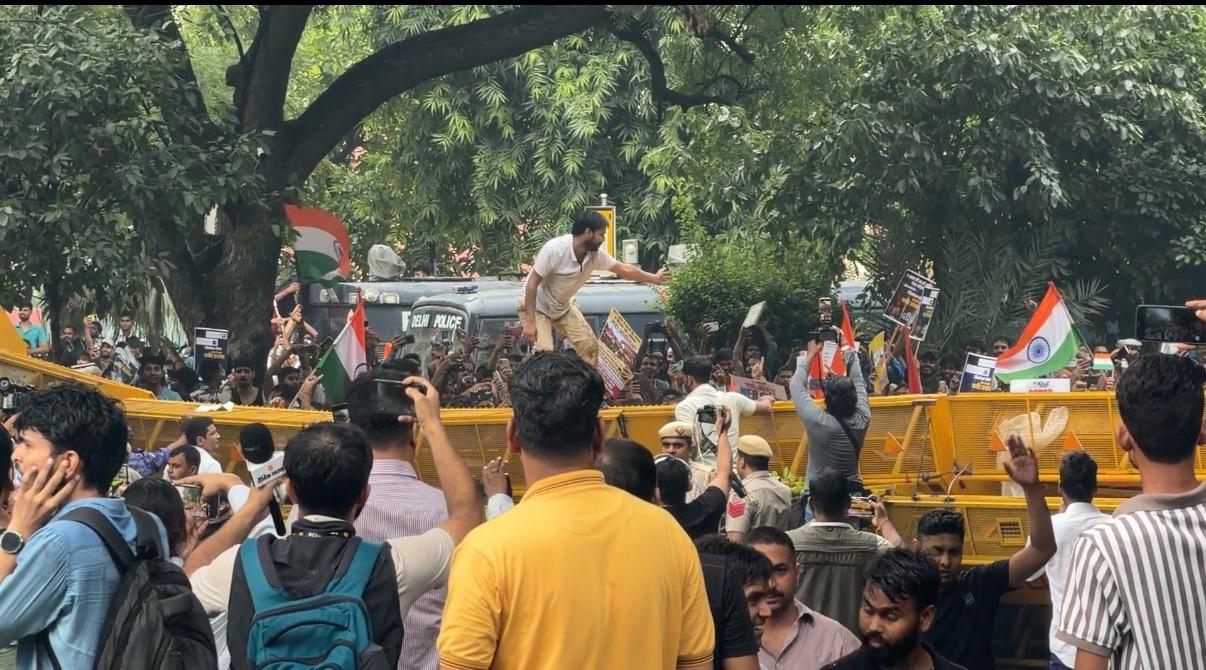
Fifty-six-year-old Kakku Khushwaha travelled from Mahoba district in Uttar Pradesh on Saturday and slept at the Cockroach Janata Party's protest site at Jantar Mantar, New Delhi.
Once a farmer and later a shopkeeper, Khushwaha travels as he pleases. He hasn't told his wife and two children much about the trip. "I teach my grandchildren strictly. I set homework for them for a few days before I leave, telling them I need to see it completed when I return," he says.
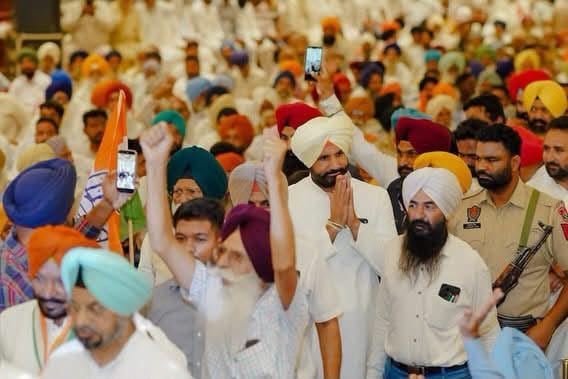
The Cockroach Janta Party (CJP), which has been leading the protests for over a month, called for a march to the Parliament on 20 July 2026, the first day of its monsoon session. At the site in the sweltering heat , people sang, sloganeered, laughed, and cheered. Before the start of the parliament session on Monday, crowds were raising slogans demanding Union Education Minister Dharmendra Pradhan’s resignation over his failure to address the country's paper-leak crisis.
The National Entrance Eligibility Test 2026 (NEET), held on May 3, was cancelled on May 12 after an investigation found papers circulating among aspirants. Over two million students were affected. The CJP has accused education minister, Pradhan, of failure to conduct examinations, including the NEET UG 2026 paper leak, the CBSE 12 portal issues and the delay in other examinations. The party in a memorandum to the government has alleged that 21 students died by suicide following the NEET UG 2026 paper leak. What began as an Instagram satire page grew into a widespread youth mobilisation, with allegations soon piling up against other examinations too -- the Central University Entrance Test, Staff Selection Commission exams, and marking scandals in the CBSE's 12th standard results.
At the protest site, climate activist Sonam Wangchuk undertook a prolonged indefinite hunger strike from 28 June 2026 in solidarity with the CJP demanding transparency in competitive examinations and the resignation of the Union Education Minister. As his fast crossed 20 days and his health deteriorated sharply, the Delhi High Court ordered that he receive necessary medical intervention, noting that the life of every citizen is precious.
However, in the wee hours of the next morning Delhi Police personnel arrived at the protest site, surrounded the stage where Wangchuk was lying with white bedsheets to block public view, and forcibly removed him to Safdarjung Hospital. Following his hospitalisation, CJP founder Abhijeet Dipke and other student activists continued the fast. Prominent student leaders such as All India Student Association (AISA) national president and JNU scholar Neha Bora, alongside Manish and Aameen, maintained an indefinite hunger strike at the site, forming human chains to protect each other during police interventions.
After sustained demonstrations, appeals from people urging them that the cause was highlighted through the hunger strike and they should carry forward the campaign in different forms and subsequent medical admissions for several participants due to failing health, the fasting students and leaders called off their strikes. However, it didn’t stop them from continuing the protest.
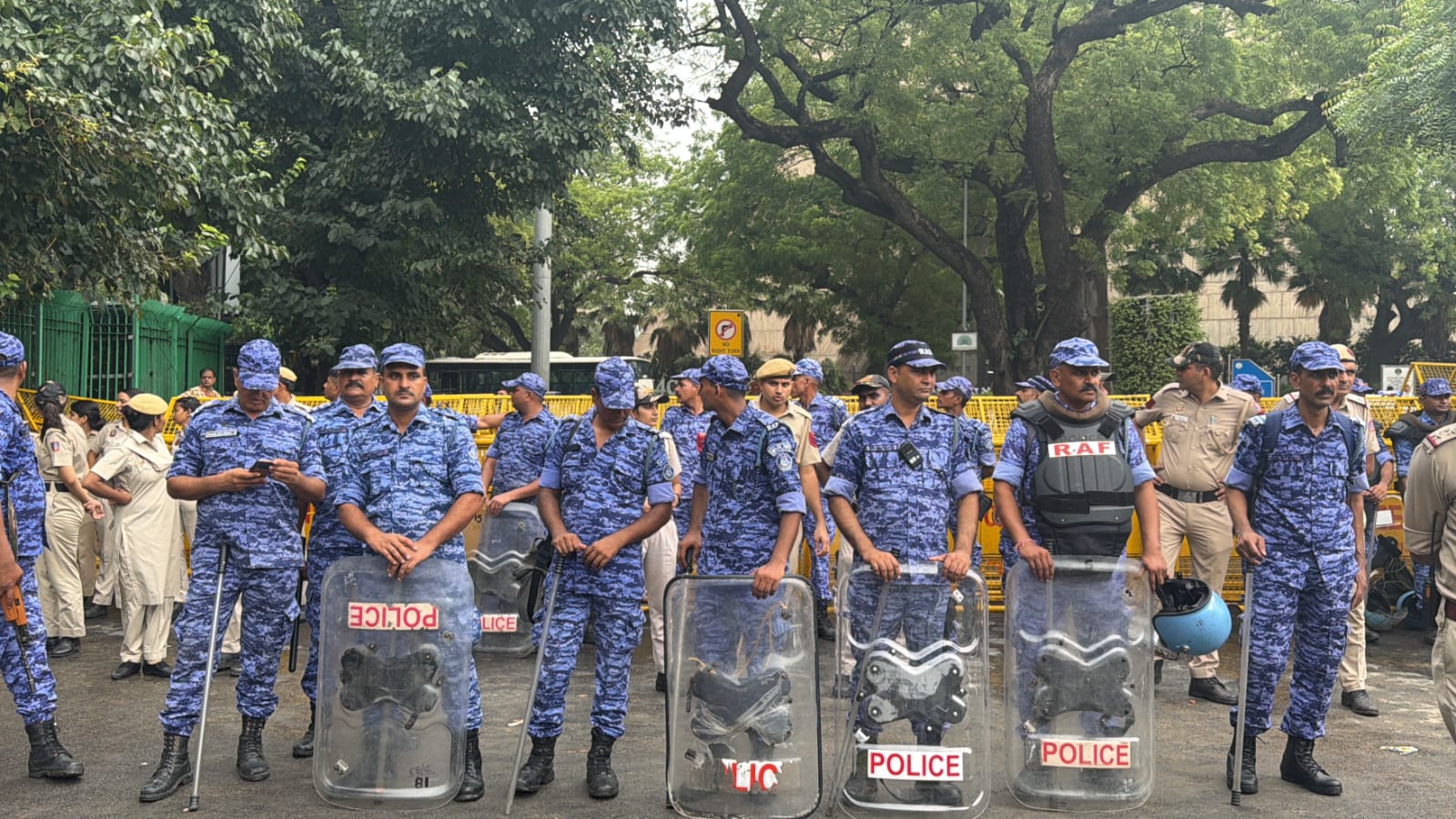
On 20 July morning, Jantar Mantar was bustling with anticipation ahead of the CJP’s call for a march to the Parliament, where the lawmakers arrived for the first day of the monsoon session. Rain that started at 6:30 am did little to dampen spirits. Many protesters sheltered near the police booth by the main site.
Pawan Kumar leaned against a barricade there, waiting for 9 am so he could start marching. "My daughter asked me, 'Papa, what can you do for me?' I was concerned and astonished. It had been a long time since she asked me for anything. I didn't know what she would ask for. She said, 'I want to go to Delhi.' I asked, 'What happened? For what purpose?' She replied, 'To Jantar Mantar.'"
Pawan had come with his wife and two daughters, the older of whom had just passed 12th standard with 84 percent marks. A daily wage worker from Jind district in Haryana earning 600 rupees a day, Pawan said his daughter dreamed of becoming a doctor and was scared for her own future. "My family is part of the Chamar caste, we were not even allowed the right to sit in class. I'm here because I don't want my kids to ever face the kinds of things we did. I cannot leave them a broken education system," he says.
Asha Sharma and her 16-year-old son Pranav arrived at the site the same day. "I literally cried seeing the footage," Pranav says. "I am a student of humanities, tomorrow my exam paper can also get leaked. I cannot expect people to stand for me if I don't raise my voice today." His mother explains what pushed them to come, "He had been asking me to take him to the protest for a long time. The events of this morning finally made it clear that we had to come."
As the time for the march approached, the crowd came out onto Tolstoy Marg. "Isteefa do, isteefa do" and "Dharmendra Pradhan gaddi chhodo" ("Dharmendra Pradhan, leave your post") echoed across. As the crowd reached the two-layer, seven-foot barricades set up overnight at the end of the road, the slogans grew louder. Police announcements telling the crowd to disperse were drowned out by boos. Riot-geared police and Rapid Action Force personnel waited on the other side, alongside protesters who hadn't made it past the barricades.
"The police may use violence, but that is no big deal. I am prepared. Our leader Abhijit Dipke has not arrived and we will move to Parliament soon after," said Afzalur, a second-year Bachelor of Arts student who had travelled two days and two nights by train from Bihar to reach Jantar Mantar. "It's not just a NEET thing. This can happen to me as well," he says. The party's central leadership did not turn up.
As clashes continued at the front, 20-year-old Goutham rested on the pavement at the back. "I had given the selection test for the Uttar Pradesh Police in 2024, but the paper leaked. The second time I gave the test, I did not perform well," he explained, having prepared for eight months only to be disheartened. He hadn't told his parents he was here.
"This is my semester break, so I just said I was going to see the Red Fort," he says. He had travelled from Ayodhya with three friends and 500 rupees between them. "I borrowed money to be here and spent 225 rupees on the tickets alone. My family just called and I told them I'd had lunch and was resting. We haven't eaten anything all day." Asked about the police action, Goutham didn't blame the officers: "The police are following orders. The people who are giving the orders are the ones that need to be held to account. If the police test had not been leaked, I would have been a police officer now."
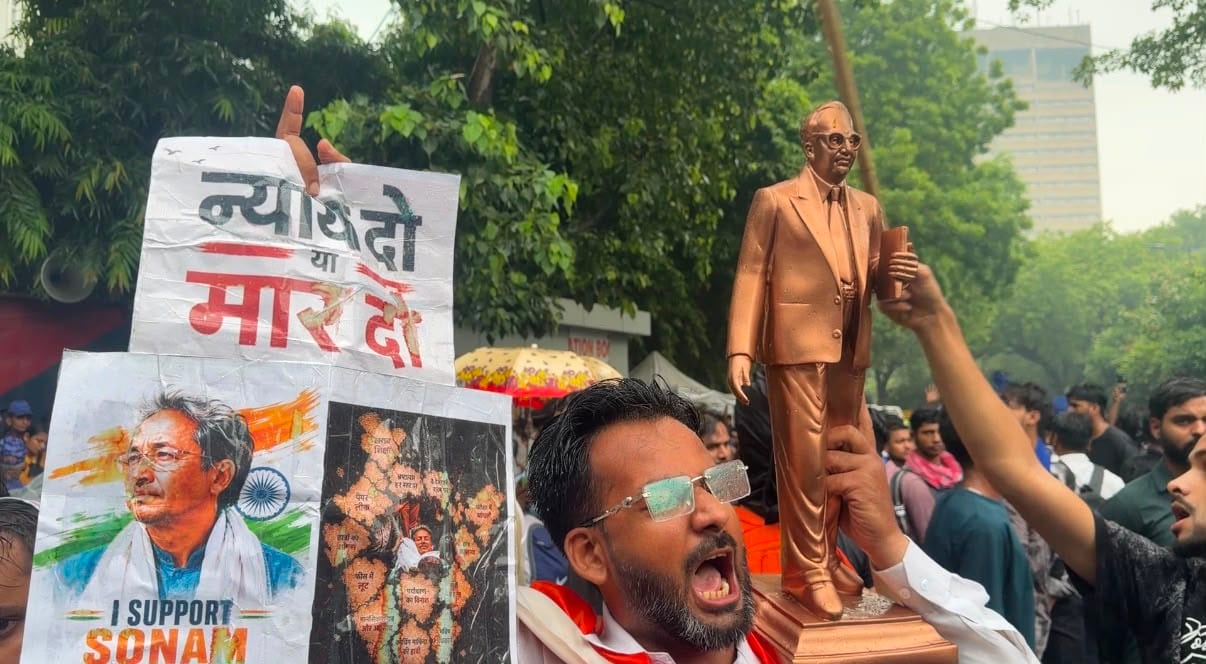
When the first protesters, crossing at least six layers of barricading, arrived close to the Parliament building, the police used force to disperse the gathering. Tear gas shelling that started around 2:30 pm a stone's throw from the building spread across central Delhi's Raisina Road, the Delhi Press Club, and outside Sansad Marg police station.
At around 3 pm, 24-year-old Wasif Ahmed, who had travelled from Mumbai to meet a friend and joined the protest, found himself caught in it. "The crowd at the front was active and sloganeering. A few meters behind, however, people were just sitting down to rest. Nothing particularly violent was happening," he said. Ahmed smelled the first shell from a distance and tried to move out.
"I assume something must have been happening in the front because a few people were running back," he said. As he and his group made their way through, a second shell landed at his side. "You close your eyes because of the pain, but then you can't run. The pain is incredibly sharp and stinging. When you breathe, a sharp pain stings your nostrils in the upper nasal passage. When your nose stings you open your mouth and then your throat burns. Tears stream rapidly from your eyes, and your nose runs profusely. We had already reached an area where people had dispersed... But if you throw it into the middle of the crowd, it gets very risky. If you fall, you could get trampled. The whole crowd is running with stinging eyes closed," he said.
By 4:30 pm, roads near Janpath metro station that had earlier been filled with crowds and sloganeering were dense with police in riot gear, tear gas rounds being fired in waves as protesters ran forward each time the smoke cleared. The Delhi Metro Rail Corporation had shut five stations — Rajiv Chowk, Janpath, Patel Chowk, Central Secretariat, and Seva Teerth — as roads jammed with people and vehicles trying to leave. Despite the violence, many protesters returned to Jantar Mantar that same night.
***
Mukesh Singh, 21, from Azamgarh in Uttar Pradesh, had taken four days off work on false pretenses to be there. "I am not someone who gets involved with political issues usually. Every government has faults, but there is a limit that has been crossed. If you make the same mistake again and again, then it is no longer a mistake," he says.
Mukesh hadn't told his family either. He had stopped school after passing 10th standard: "I didn't see a point in wasting the years since I would get the same job nevertheless." He says he had no hope of finding higher-paying work even with a degree. "Our aim is to make sure that we reach the parliament and make our voice heard. Maybe Jantar Mantar is too far from them for our voices to reach them. From the parliament they will have no difficulty in hearing our voice."
Sarovar Zaidi, a Delhi based social anthropologist, sees something larger taking shape. "The biggest achievement of the protest is that it has fundamentally shifted the framework of political dissent. Public figures like politicians, teachers, civil society activists, even comedians have had cases filed against them in the past. Today, open criticism of the government has become possible. There is a new kind of fearlessness," she said.
Despite criticism of the protest's political ambiguity, she argues that vagueness may be its strength. "Gen Z has grown up inside propaganda. For them to show dissent in this manner signals a shift in consciousness and a break in propaganda. The protest has exceeded the work it set out to do by changing this consciousness."
Comments (0)